
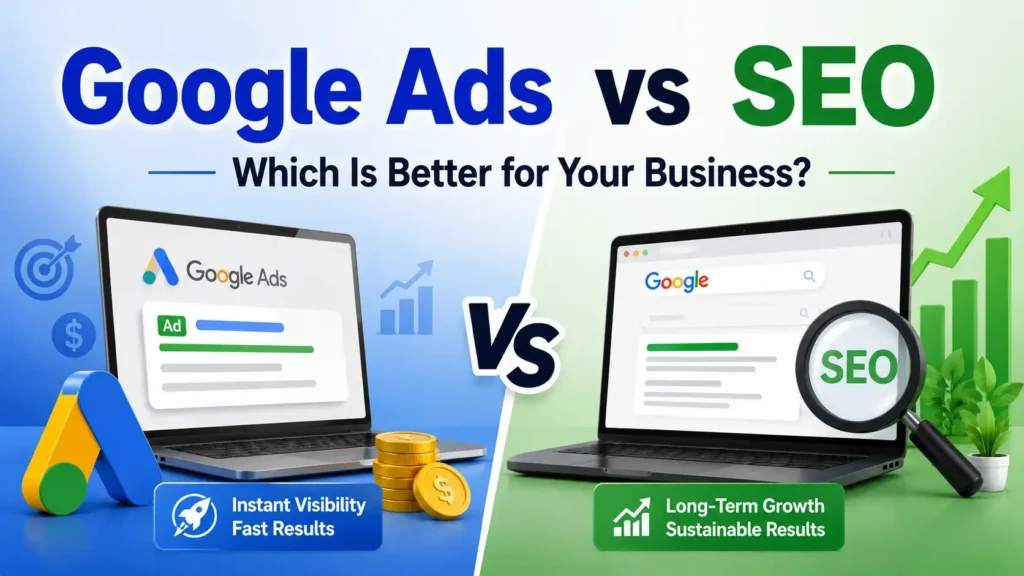
Businesses use different digital marketing strategies to reach potential customers online. SEO and Google Ads are two popular options that help improve visibility on search engines. However, both work differently and offer different benefits.
SEO focuses on improving organic search visibility over time, while Google Ads allows businesses to pay for advertising placements. Understanding their differences can help you choose the right approach for your business goals and budget.
What Is SEO?
Search engine optimization (SEO) involves improving website content, structure, and technical performance to help search engines understand your pages and connect them with relevant searches.
SEO includes keyword research, content optimization, internal linking, and technical improvements.
Benefits of SEO
- Long-term visibility: Well-optimized pages may continue attracting organic traffic over time.
- No payment per organic click: Businesses do not pay Google for each click on an organic search result.
- Builds credibility: Helpful content can demonstrate knowledge and answer customer questions.
- Supports content marketing: Blogs and service pages can attract visitors researching related topics.
SEO takes time and ongoing effort. Rankings are not guaranteed and may change with competition, website quality, and search engine updates.
What Are Google Ads?
Google Ads is an online advertising platform that enables businesses to promote their products and services through paid placements. Businesses can create campaigns, select relevant keywords, set budgets, and measure results such as clicks and conversions.
For example, a website development company can use Google Ads to reach people searching for website development services.
Benefits of Google Ads
- Faster visibility: Eligible ads may begin appearing after campaign approval.
- Budget control: Businesses can set and adjust advertising budgets.
- Targeted reach: Campaigns can target relevant searches and locations.
- Measurable results: Advertisers can track clicks, costs, leads, and conversions.
However, Google Ads requires ongoing advertising spend. Costs vary, and clicks do not guarantee inquiries or sales. Traffic from ads also depends on continued campaign delivery.
SEO vs Google Ads: Key Differences
| Factor | SEO | Google Ads |
| Visibility | Organic search results | Paid advertising placements |
| Cost | Content and optimization investment | Advertising budget and management costs |
| Timing | Usually takes time | May provide visibility soon after approval |
| Traffic | Depends on organic visibility | Depends on campaign delivery and budget |
| Best suited for | Building organic visibility | Promoting offers and reaching targeted audiences |
Neither strategy guarantees specific rankings, traffic, or business results. The right choice depends on your objectives and resources.
When Should You Choose SEO?
SEO may be suitable if you want to build organic visibility and attract visitors through useful website content.
Consider prioritizing SEO when:
You want to develop a long-term content strategy.
Your customers regularly search for information related to your services.
You want to improve your website structure and content quality.
You can invest consistently in website optimization.
When Should You Choose Google Ads?
Google Ads may be useful when you want to promote a service, test demand, or reach relevant audiences within a defined budget.
Consider Google Ads when:
- You need to promote a time-sensitive offer.
- You want to test keywords and landing pages.
- You have a defined advertising budget.
- You can track leads, sales, or other meaningful conversions.
Before launching a campaign, ensure that your landing page clearly explains your services and provides an easy way for visitors to contact you.
Can SEO and Google Ads Work Together?
Yes. SEO and Google Ads can complement each other when they support a shared marketing goal.
Google Ads can help businesses test search terms and offers, while SEO helps develop useful content for organic search visibility. Businesses can measure both channels to understand which activities attract relevant visitors and generate qualified leads.
Instead of focusing only on clicks, track meaningful outcomes such as inquiries, conversion rates, and sales.
Conclusion
SEO and Google Ads serve different purposes. SEO helps businesses work toward long-term organic visibility, while Google Ads offers paid advertising opportunities that may support more immediate marketing objectives.
There is no single strategy that suits every business. Your choice should depend on your goals, budget, competition, and timeline. For many businesses, combining SEO with carefully managed advertising can provide a balanced digital marketing approach.